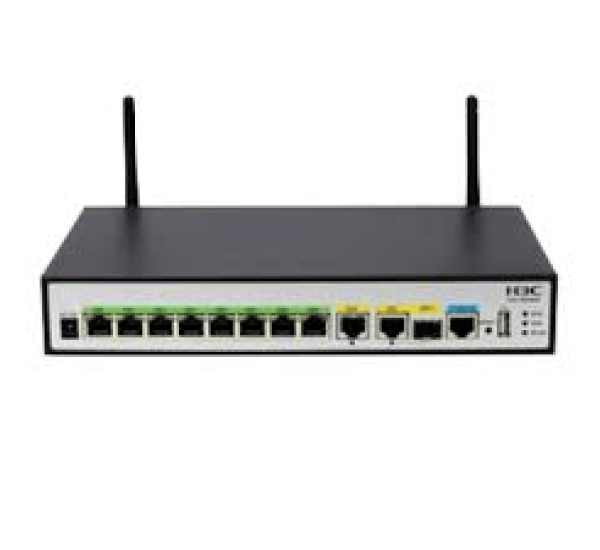
The MSR800 is a desktop-style router that provides essential routing, security, and connectivity features in a simple, all-in-one package. It's a step down in size and expandability from the modular MSR1008, making it ideal for locations where simplicity and cost are key.
Key Specifications at a Glance
Detailed Analysis of Features
1. Fixed Port Configuration - Simplicity is Key
This is the core design principle of the MSR800. Unlike the modular MSR1008, everything is built-in:
Dual Ethernet WAN Ports: Designed specifically for load balancing or failover between two internet providers. This is a critical feature for business continuity.
4 or 8 LAN Switch Ports: Provides built-in switching for connecting local computers, printers, and servers without an immediate need for an external switch.
No Modular Slots: You cannot add SFP fiber modules, DSL modems, or serial interfaces. What you see is what you get.
2. Software & Feature Set
It runs H3C's Comware OS, providing enterprise-like features in a small box:
Routing: Static routes, RIPv2, OSPF.
Security: Stateful firewall, IPSec VPN (for site-to-site tunnels), and SSL VPN (for remote user access).
Unified Threat Management (UTM): Optional licenses for IPS, Anti-Virus, and Web Filtering. Enabling these will significantly impact throughput.
WAN Optimization: Basic features like data compression.
3. Connectivity Options
Strengths and Advantages
Extremely Simple Deployment: "Plug and play" for a basic setup. No need to choose modules or complex hardware configurations.
Cost-Effective: Lower initial purchase price than modular routers like the MSR1008.
Built-in Redundancy: Dual WAN ports are standard, which is a huge advantage for a small business.
Compact and Silent: Desktop form factor with passive cooling (no fan), perfect for a small office or retail counter.
Enterprise-Lite Features: Brings features like VPN and advanced routing to a market that typically only gets consumer-grade gear.
-750x250.png "Datacom Technologies (BD)")