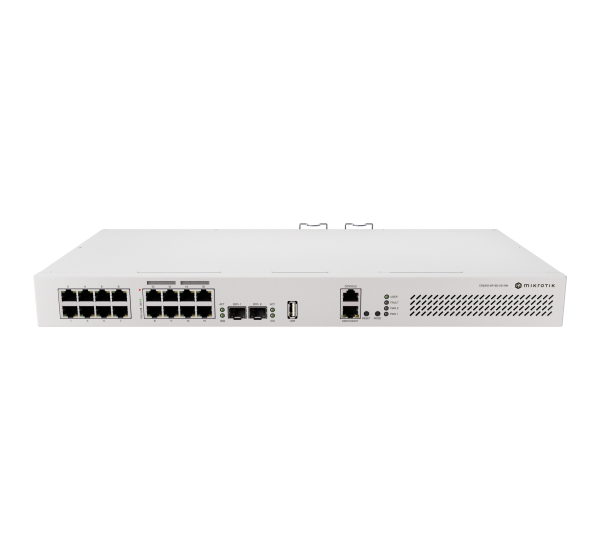
The CRS418 is a 1U rack-mounted switch that sits in the sweet spot between a simple unmanaged switch and a full-fledged router. Its standout feature is the 8 PoE+ ports that can deliver substantial power to connected devices, making it ideal for powering WiFi access points, IP cameras, and other PoE devices.
Key Specifications at a Glance
Detailed Analysis of Features
1. PoE Capabilities (The Main Attraction)
This is the primary reason to buy this switch.
8 PoE+ Ports (802.3at/af): Each port can deliver up to 30W, perfect for:
Multiple MikroTik or other enterprise WiFi 6/6E access points
PTZ IP cameras with heaters/blowers
IP phones, VoIP systems
PoE-powered small switches
240W Total Budget: This is a very generous budget. You could theoretically power 8 devices drawing 30W each, though in practice, most devices use less, allowing you to power many more.
PoE Management: You can enable/disable PoE per port, set power priority, and monitor power consumption directly in RouterOS/SwOS.
2. Port Configuration & Switching Performance
8 x Non-PoE Gigabit Ports: Useful for connecting devices that don't require power, like servers, computers, or uplinks to other non-PoE switches.
2 x SFP+ 10G Ports: This is a critical feature. These ports are used for:
Uplink: Connecting to your main router or core network at 10 Gbps, preventing the switch from becoming a bottleneck.
Aggregation: Linking two CRS418 switches together for high-speed inter-switch communication.
High-Speed Server Connection: Directly connecting a NAS or server that needs more than 1 Gbps.
Hardware Offloading: The Marvell switch chip handles all switching (Layer 2) at wire-speed. This means inter-VLAN routing and switching between all ports happens in hardware with no performance penalty, as long as you configure it correctly.
Operating Systems: SwOS vs. RouterOS
This switch can run two different operating systems, which is a key decision point:
SwOS (Switch OS) - Recommended for Simple Switching
Purpose: Web-based, simplified interface designed only for switching.
Use Case: If you just need a managed PoE switch for VLANs, QoS, and PoE management.
Pros: Very easy to set up, hard to break, boots instantly.
Cons: Limited features; no routing, firewall, or other advanced RouterOS tools.
-750x250.png "Datacom Technologies (BD)")