Key Specifications & Features
Redundant Star Topology Support:
Dual Independent Uplinks: The switch has two network interfaces (often fiber via SFP slots) that connect to two separate, parallel network infrastructures (Network A and Network B).
Device-Level Redundancy: The end devices (PLCs, relays) connect via standard single Ethernet cables to the switch's copper ports. The switch handles the PRP duplication and management transparently.
Zero-Recovery-Time Redundancy:
Implements PRP or supports HSR standards, providing true zero-switchover-time redundancy. This is superior to ring protocols (<50ms) for the most time-critical traffic (e.g., tripping commands in a substation).
Hardened, "Zero-Touch" Design (Similar to H15x):
Configuration via DIP Switches: Simplicity is key. Set the mode (PRP/HSR, RedBox), define which ports belong to Network A and Network B.
No IP for Data Plane: Operates without an IP address for its forwarding logic, eliminating network configuration and IP conflict risks.
Extreme Environmental Specs: -40°C to +85°C, full compliance with IEC 61850-3, IEEE 1613, IEC 62439-3. Built for substation switchyards and other severe locations.
Typical Port Configuration:
How It Works: The "RedBox" Function
This is the most common application:
The H16x switch is placed in a control cabinet.
Its Fiber Uplink Port 1 connects to Network A.
Its Fiber Uplink Port 2 connects to Network B (physically separate cables and infrastructure from Network A).
All local devices (relays, meters) plug into the switch's copper ports with standard, single cables.
The Switch's Magic: When a device sends a frame, the switch duplicates it, sends one copy onto Network A and the identical copy onto Network B. For incoming traffic, it accepts the first valid copy from either network and filters out the duplicate.
Typical Use Cases (The Most Critical Networks)
This switch is designed for the absolute pinnacle of network availability requirements:
IEC 61850-Process Bus & Protection Schemes: The premier use case. Connecting merging units and protection relays in a substation's process bus, where a single lost packet could prevent a trip command and cause catastrophic equipment damage.
Critical Control in Nuclear, Oil & Gas: Safety-critical shutdown systems where any communication interruption is unacceptable.
High-Speed Manufacturing: For robotic or motion control systems where even a 20ms network hiccup would cause a production fault.
Comparison: H16x vs. H15x vs. Managed Switches
Advantages
Ultimate Availability: True zero-recovery-time redundancy. The most robust network design possible at Layer 2.
Simplicity for End Devices: Critical devices don't need special PRP/HSR firmware or dual NICs; they connect via a standard single cable.
Extreme Hardening: Built to survive where other switches would fail.
Deterministic & Predictable: No dynamic protocols, just standard-based frame duplication.
Disadvantages / Considerations
Very High Infrastructure Cost: Requires duplicate cabling, switches, and paths (Network A and Network B). This is a significant investment.
Extreme Specialization: It is a single-purpose tool for PRP/HSR. Cannot be repurposed as a general-purpose managed switch.
Bandwidth Overhead: All traffic is duplicated, effectively halving the available bandwidth of each network leg for unique traffic.
Limited Interoperability: The network must be designed around PRP/HSR. Mixing with standard Ethernet devices requires careful planning (using RedBoxes like the H16x).
The Schneider Electric MiCOM H-Series H16x is the specialist's specialist. It is not a general networking device. It is a hardened "Redundancy Box" that implements the zero-recovery-time PRP/HSR standards, providing the highest possible level of network availability for the most critical industrial and utility applications.
-750x250.png "Datacom Technologies (BD)")
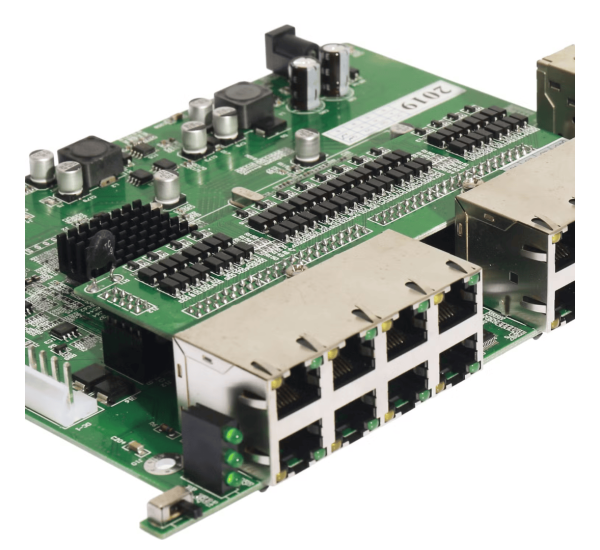
-600x550h.jpg "Schneider Electric MiCOM H-Series H16x – Redundant Star Industrial Switch")
-80x80.jpg "Schneider Electric MiCOM H-Series H16x – Redundant Star Industrial Switch")


